09.24.2025

Leaders of Chicago’s Architecture Schools - Evening Cue LLC
How Chicago’s architecture schools—and AIA Chicago—are shaping the next generation of design professionals
AIA Chicago has long included a Student Director on its Board, with the position historically rotating among the city’s three schools of architecture. In 2022, Chapter members approved a bylaws change that expanded student representation, establishing three dedicated Student Director roles—one for each school. These directors offer a vital perspective, helping to strengthen connections with the local AIAS (American Institute of Architecture Students) chapters as AIA Chicago explores new ways to support students in their transition from academia to professional practice.
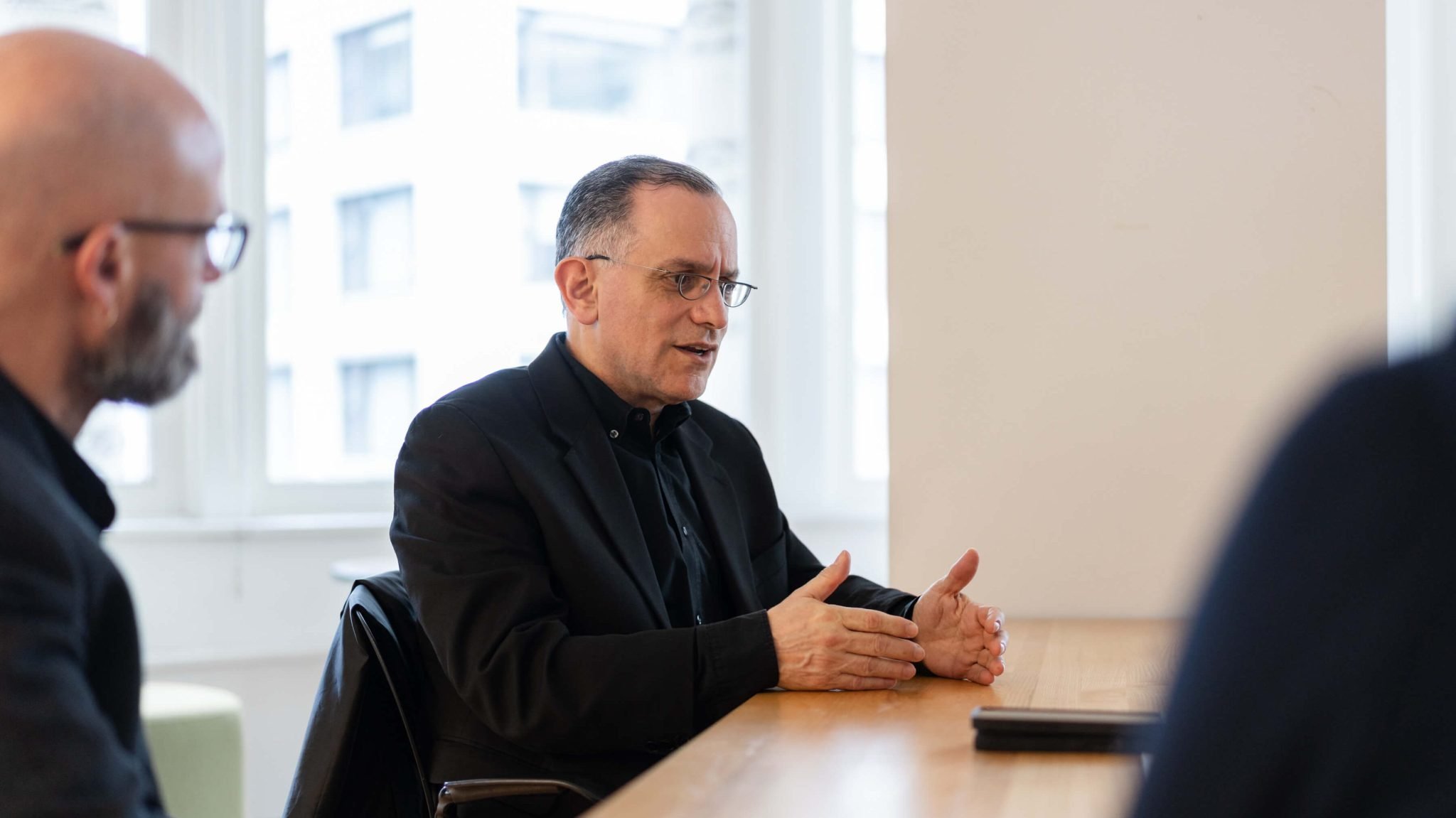
In April, Executive Director Jen Masengarb sat down with the heads of each school for a conversation. Participants included David Brown, Acting Director of the School of Architecture, University of Illinois Chicago; Reed Kroloff, Dean of the College of Architecture, Illinois Institute of Technology; Nicholas Lowe, John H. Brian Chair of Historic Preservation, School of the Art Institute of Chicago; and Tristan Sterk, Chair of Architecture and Interior Architecture, School of the Art Institute of Chicago.
Jen Masengarb (JM): Thanks for being here today. Let’s jump into the conversation. What sets your school apart from the others here in Chicago?
Tristan Sterk (TS): Interior architecture.
Reed Kroloff (RK): The heritage of Modernism and Mies.
David Brown (DB): I think it really is trying to be protective in terms of design. And providing a good theory foundation. And I think we really try to emphasize architecture as a cultural practice. The criticism program, in particular, I think starts to frame the multiple things that people can pursue with architecture.

Understanding today’s students
JM: What are your students most passionate about?
DB: The student groups have been more active in organizing events…inviting faculty to come and speak or touring offices. They are curious about learning from the faculty, and I think more and more they are trying to learn about [things] beyond the school. We try to foster that they engage the city as much as possible.
Nicholas Lowe (NL): [For us], it’s professional connections. They want a network that’s really clear and they want to be out in the city. Being in Chicago is a big deal for them, for sure. Sustainability is another issue that a lot of students want to talk about. And climate change. They also want to talk about social justice. And they see that as really visible in Chicago in a certain way because of where we are and who we are.
TS: They want to make the world a better place… and it comes through several lenses. Sustainability is certainly a lens. Social responsibility is another lens. What they want is mentorship.
NL: I’m going to say they’re really good at leveraging their peer group. That’s another thing I noticed, really, sincerely, that they come in ready to work together.
RK: All those things are true, particularly for our students. I would echo the interest in social justice, and I would echo the interest in environmental justice and environmentalism in general. Our students are also, because of the nature of the school, very interested in how you make a building. They’re all mad for the shop. They can’t spend enough time in it, and I would guess that’s true at all three schools.
Architectural practitioners as faculty members
JM: You each have many faculty members who are also practicing architects. In what ways are these faculty members shaping the curriculum and the conversations with the students?
RK: They area driving force. I’ll give you one example. I’m quite sure this goes on in all our schools. Our fourth year is now a year-long comprehensive building experience for the students. Five years ago, that didn’t exist. Two practitioners have set it up. They have a lecture series that brings in engineers, bankers, contractors, client groups of various types—you name it, they all come in. And the students just devour this…So that’s had a profound effect.
TS: I think probably one of the hardest things for us to do is to find a great teacher. And I think the reason could be particular to our school. Because in our M.O. we don’t squish individuals. But we expect them to put something on the table. And that contributes to the conversation. That places a very high demand on the teacher as they need a tremendous amount of flexibility because they need to be able to respect creative practices from different points of view. And classes that have people from around the world will have quite a diverse point of view, and so you have a lot of delicate conversations.
One of the most important attributes of a professor who comes [to SAIC] is someone who has the ability to do that. I think our faculty has a very pluralistic approach to design.
DB: I think for us that’s probably a little bit of a back and forth. Most of the years, except for the final year of our programs, are team-taught. In terms of the undergrads, there are five or six sections. There’s usually somebody that’s coordinating. That could be a practitioner or it could be somebody that’s more theory focused. Or it could be a broad generalist…someone who’s been teaching for some time. We often get clustered in types of interest. There are those of us who are more interested in urbanism, for example. In most cases, there are ways in which those studios are getting framed where they’re asking questions. And potentially those questions are coming out of things faculty are encountering in practice.

Newly-released ‘Building Impact’ report on the gap between academic and practice
JM: I’d like to shift the conversation to the new Building Impact report; an independent study that RAND released examining the gap between architectural academia and professional practice. It picks up from the well-known “Boyer Report” (1996), and was commissioned by the AIA, NCARB (National Council of Architectural Registration Boards), with support from ACSA (Association of Collegiate Schools of Architecture).
Two quotes from the study jumped out to me.
Speaking about their program, the faculty member said, “… its core is still conceptual design and ideas because, again, we are teaching for the next 50 years, not the next five years.”
Another faculty member captured the dilemma in recognizing the inherent conflict between teaching to “land a job” and teaching “for service of society.”
In the same study, an early licensed practicing professional reflected on their own schooling and the lack of immediately applicable knowledge in transitioning into practice: “It sort of feels like they’re preparing us to be a good design principal 30 years from now rather than the in-between where we work up to that point.”
What are your thoughts on this?
RK: We’re teaching for life, I would say, [but here] you get to the nub of the problem with higher education and architecture. I wasn’t…very keen on the RAND report because, like so many other [studies], it stated the problem and then didn’t really offer any kind of meaningful solutions… The one before [the Boyer Report] … got a little closer, right?
JM: Do you think that expectations from the profession are wrong? And do you think the expectations from the students are wrong?
NL: No, I don’t.
RK: They’re not wrong. What’s wrong is the way we’re trying to resolve it. The school’s saying: We’ve done everything we can do now you pick it up. And the profession saying: You guys don’t do nearly enough of this.
But we all set this system up. It’s wrong for all of us.I think that the expectations need to be reconsidered along with how the delivery system works. I would like to see less [complaining] about it and more people sitting down and saying, hey, here are three ideas. Let’s try one.
JM: Are students still wanting to pursue licensure?
RK: Yes.
NL: Yes.
RK: [The number of students interested in licensure] dipped in the 1980s and 1990s and… now, [it’s] started to ratchet back up again. These kids want to go out and be architects. Not all of them, but the vast majority of them.
TS: Very close to all.
DB: I started thinking I wanted to be a practicing architect and then as I was going through school I ended up pursuing teaching and then everything just evolved from there… And I think the base is to have a kind of focus that would enable someone to build a body of work that’s a combo of writing and design, but not a traditional practice by any means.
TS: If you ask our classes, it is the rare student that doesn’t put up their hand when asked if they want to be licensed. But what does that mean to the students? They want to be a professional. But I think there is a little bit of difference in that insofar as we do have a lot of people who go on to work on the client side.
I look at it a little bit differently. I think it’s simpler. I think the people who come here [to SAIC], they want to join the profession because they want to make the world a better place. I don’t think we have to teach about the ‘50-year problem’. They will find the ‘50-year problem’. We are preparing them as practitioners to go into the workplace, and I think that’s what they want. All we have to do is to prepare them so that they’re out into the world and they experience success. And then they blaze their own paths.
RK: I agree and I disagree. There’s a perception problem on both sides of the issue or it wouldn’t show up in reports consistently about what the profession thinks should happen at the end of school and what schools think should happen at the beginning of the profession. But you raise a good point that students are consistently inventive about how they find their way through this, and I think the professionals underestimate them. They learn and absorb really, really fast.
TS: I would say there is a general fault in architectural education. The status quo is that we are producing designers.
RK: That’s a good point.
TS: We do wear these three different hats. If we were to just categorize what we do in this profession [is that] we are information creators, right? We just draw a lot, but we’re also on the telephone. We’re also writing, corresponding. We’re managing legal agreements. We’re on site. And we have to speak these three basic languages: law, construction and design.
RK: We’re talking only about the school side. The professional side should be heard and considered on this. And over the years, what I hear from professionals, stays relatively consistent. Which is: They’re not learning enough at school. I need them to have more of X or Y. And so X and Y may change, but it’s the same argument each time: they need to have more of it.
JM: Is that a conversation you’re having at UIC?
DB: It varies student to student. I think it also depends on when students start to pursue short internship experiences. Compared to forgoing that until they finish [school] and then thinking: Oh well, now that I’m finished, I need to find a job. I think that’s where there’s more anxious moments. And I think realizing how they haven’t learned this software yet or somehow there’s some other demand—that becomes a kind of obstacle in terms of the learning.
But I think we really try to emphasize the kind of learning and education and not trying to teach to specific things too much. Students might start to incorporate Revit on their own. It’s not something we teach specifically, but I think that’s what they’re hearing that a lot of offices want Revit… But for teaching it already seems to set so many parameters before students have even had a chance to think through: Do I want this to be this material or some other aspect?
AIA Chicago’s role in supporting emerging professionals

JM: Let’s shift the conversation again. A few years ago our chapter changed our bylaws to have three students directors on our Board of Directors—one from each of your institutions— rather than rotating between schools every three years. This has really strengthened our ties to your schools because it’s the AIAS (American Institute of Architecture Students) chapters that appoint that person. We also restructured our staff team and now have a Director of Outreach, who, as one part of her role, is the liaison to the students and faculty. And as a result, we’re seeing more of your students at our programs, which we’re delighted to see. We have over 600 student members at AIA Chicago.
We’re thinking about our roles—as a Chapter and Foundation—to help students bridge the gap between academia and professional practice. What does that last year of school or first year after graduation look like for them? How do we better support your students and new grads?
NL: Is it about facilitating working opportunities between schools and professional offices?… I’m thinking, what else?
RK: Maybe this chapter—working with three very willing, different, and interesting schools—could be a place to invent something that helps span that gap and keeps people from falling into the chasm. Truly inventive.
DB: How can you help students find means to fill some gaps? Without being made to feel like somehow the education that they’ve been getting, from one place compared to another, is quote, un-quote, “failing”. To understand that they have different weights and to appreciate the different weights, but then also begin to say here are some means where, if you feel like you need more understanding of this aspect, here some ways in which you can find that out or pursue it. Finding means where students just continue to broaden their understanding.
TS: I think the chapter is wonderful, and the [Wing] mentorship program is brilliant, and our students love it. The reason why it’s so successful is because it motivates them… the relationships that they build through AIA are very important and useful to them. Like I said, I think you’re doing everything right with that.
JM: What if we were to do something each fall on the topic: “You’ve graduated! Now what?” What would that look like?
RK: Oh, that could be a lot of fun. That could be a set of seminars.
NL: As an annual or semiannual event perhaps?
RK: Maybe there’s a way that AIA Chicago becomes the clearing house for student internships. It could be tied to the schools. We could all figure out a way that they get a certain amount of academic credit. I know we could work that out. And it’s not mandatory, it’s voluntary… This is what I mean by doing something creative in Chicago, something that’s different. We can stand up and blaze a path of innovation.
NL: The National Council for Preservation and Education has an incredible internship piece of their website. Having something local like that would be really, really effective. I think [internships] are the biggest question I’m getting all the time.
TS: Maybe if that’s too difficult, see if you can extend your mentorship program. Maybe every intern in the city has a mentor. We keep talking about internships. That’s one person going to a firm.
RK: There’s another possibility:that an internship has a group of internship managers who have a cohort with whom they work to pass on their knowledge.
TS: It’s a pluralistic mentorship. Have different mentees. And they all kind of work together.
RK: I mean, there are ways. I just love the idea that two years from now, we’re the city that the whole rest of architecture is looking at.
Architecture Degrees Offered by NAAB-accredited (National Architectural Accrediting Board) schools in Illinois (as of August 2025)
Illinois Institute of Technology
Bachelor of Architecture (5 year, BArch)
Master of Architecture (2-year, 3-yearMArch)
Master of Architecture/Master of Business Administration
Master of Landscape Architecture and Urbanism (also as dual degree with MArch)
Master of Science in Architecture
Master of Tall Buildings and Vertical Urbanism
Master of High Performance Buildings
Doctor of Philosophy in Architecture
Judson University, Elgin IL
Bachelor of Architecture (BArch)
Bachelor of Arts in Interior Design (BA Interior Design)
Master of Architecture (MArch)
School of the Art Institute of Chicago
Bachelor of Fine Arts in Studio (Architecture Pathway; Interior Architecture Pathway; Designed Objects Pathway)
Master of Architecture (MArch)
Master of Architecture with a track in Interior Architecture
Master of Science in Historic Preservation
Southern Illinois University, Carbondale IL
Bachelor of Science in Architectural Studies (BS Arch)
Master of Architecture (MArch)
University of Illinois Chicago
Bachelor of Science in Architecture (BSArch)
Bachelor of Arts in Architectural Studies
Minor in Architectural Studies
Master of Architecture (MArch)
Master of Arts in Design Criticism
Master of Science in Architecture
University of Illinois at Urbana-Champaign, Champaign IL
Bachelor of Science in Architectural Studies (BSAS)
Minor in Architectural Studies
Master of Architecture (MArch)
Master of Science in Architectural Studies
Doctor of Philosophy in Architecture
Doctor of Philosophy in Landscape Architecture
We want to hear from you
Reflecting on your own journey from student to professional, what support would have made that transition easier, and how can AIA Chicago facilitate that?
Share your thoughts or interest in getting involved by writing to us at editor@aiachicago.org. Your response could be featured on AIA Chicago’s blog or in a future issue of Chicago Architect.
Hearing from Schools Across Illinois
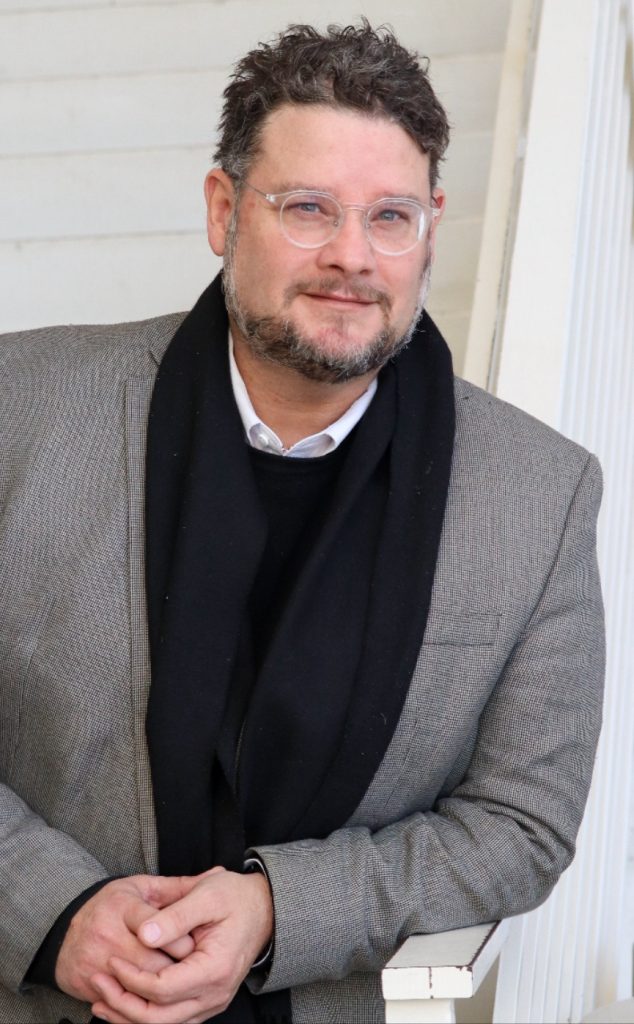
Francisco Rodriguez Suarez, FAIA
Director and Clayton T. Miers Professor
University of Illinois at Urbana-Champaign
What sets U of I apart from other schools of architecture?
The University of Illinois has a remarkable history, being the oldest public school of architecture in the U.S. and the first to graduate both a male and a female architect. But aside from celebrating history, it is quite conscious of its mandate to engage the important issues of our time, as our graduates become leaders in Chicago—arguably one of the world’s epicenters of architecture culture and practice. We are committed to providing this carefully calibrated balance between memory and desire at a cost that is affordable to the widest possible cross-section of society.
From your perspective, what is most critical in bridging the gap for students between academia and professional practice?
As a practicing architect and a studio instructor, one of my first initiatives was to revamp our design offering through robust curricular changes, changes to faculty recruiting, and a conscious expansion of our footprint to Chicago and abroad. The creation of an Alumni Board with some of the most important architecture leaders in the city paved the way for an innovative initiative of collaborations not only with the Chicago Architecture Center, but also with design firms where students are embedded within their spaces or directly collaborating with their design teams. Similarly, we are converting our Chicago Studio into a community engagement hub, providing students the unique opportunity to work directly with community leaders on real challenges that require design solutions.
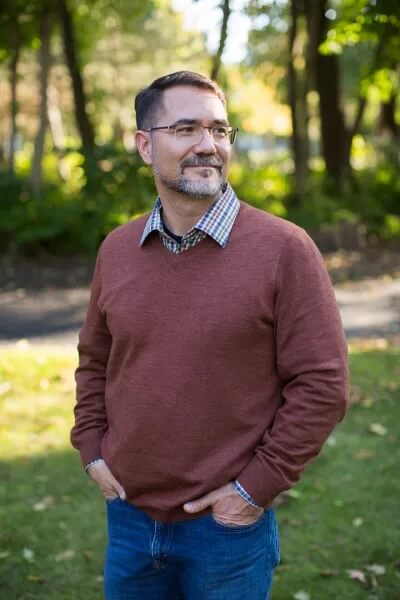
Sean M. Gallagher, AIA
Professor
Judson University
What sets Judson University apart from other schools of architecture?
As a faith-based institution, our program seeks to develop our students as leaders that shape the world through the vocation of architecture. Stewardship of the environment and a love for others in our service to the profession are paramount. A very practical distinctive of our program is the yearlong Preceptorship following a student’s 4th year, which allows our students a reality-based experience before returning to complete the MArch.
From your perspective, what is most critical in bridging the gap for students between academia and professional practice?
Critical to bridging the gap between school and life as a professional is the need to establish an attitude of concern and care for continuous learning. The fluidity of the profession in terms of all aspects of practice demands that graduates be nimble with their professional and interpersonal skills. As graduates find themselves in a constantly shifting landscape of evolution in architecture, it’s imperative that students be prepared for and embrace the changes and take leadership as an opportunity to encourage community flourishing.